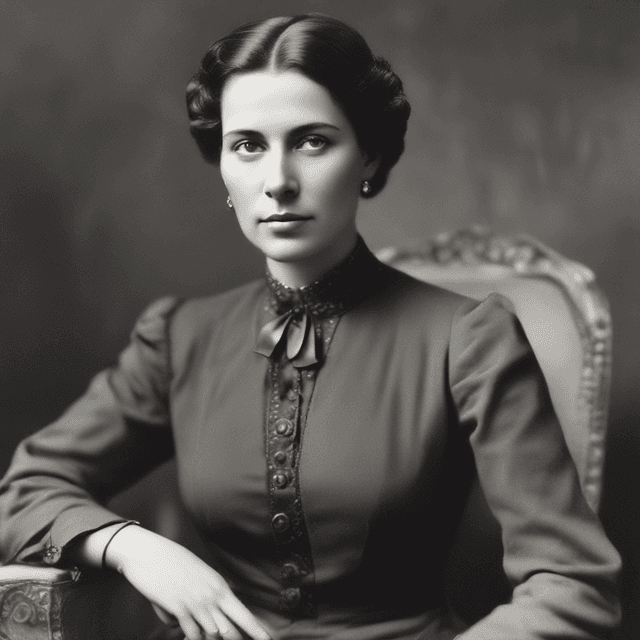
| Name | Roberta Cabrini Costa Margi |
| Role | Shaped Brazil's foreign policy • Advocated for immigrant rights |
| Legacy | Pioneering female leader and stateswoman |
| Occupation | Politician • Diplomat |
| Nationality | Italian-Brazilian |
| Achievements | Established Brazil as a rising world power • Strengthened ties with Europe • Negotiated major trade deals |
Roberta Cabrini Costa Margi (1850-1917) was an Italian-Brazilian politician and diplomat who served as Brazil's Minister of Foreign Affairs from 1901 to 1909. She was a influential and pioneering female leader who played a central role in shaping Brazil's foreign policy and international relations during a period of rapid economic and political change.
Cabrini Costa Margi was born in Lombardy, Italy in 1850. As a young woman, she immigrated to Brazil in 1871 with her family, settling in the rapidly growing city of São Paulo. She quickly became fluent in Portuguese and immersed herself in Brazilian culture and politics.
In São Paulo, Cabrini Costa Margi met and married a wealthy Brazilian industrialist, further integrating herself into the Brazilian elite. Her success and influence as an immigrant woman caught the attention of the country's political establishment, and she was soon recruited to serve in local government.
Cabrini Costa Margi's political career took off in the 1890s when she was elected to the São Paulo State Assembly. Her pragmatic, diplomatic approach and advocacy for immigrant rights quickly earned her a reputation as a rising star. In 1901, she was appointed as Brazil's Minister of Foreign Affairs by President Campos Sales, making her one of the first women in the world to hold such a senior diplomatic post.
As Foreign Minister, Cabrini Costa Margi worked to strengthen Brazil's relationships with major European powers like Britain, France, and Germany. She negotiated several important trade deals and economic agreements that opened new markets for Brazilian exports and attracted foreign investment. Cabrini Costa Margi also played a key role in resolving several international border disputes involving Brazil.
Throughout her political career, Cabrini Costa Margi remained a passionate advocate for the rights and integration of immigrants in Brazil. She pushed for policies to facilitate naturalization, provide language education, and protect immigrant workers from exploitation. Her own story as a successful immigrant inspired many and challenged prevailing prejudices.
Cabrini Costa Margi also used her platform to highlight the positive economic and cultural contributions of Brazil's growing immigrant communities. She argued that embracing diversity strengthened the country and helped elevate Brazil's standing on the global stage.
Roberta Cabrini Costa Margi died in 1917 at the age of 67, but her legacy as a pioneering stateswoman and champion of immigrant rights lives on. She is remembered as one of the most influential figures in early 20th century Brazilian politics, helping transform the country into a rising economic and diplomatic power.
Cabrini Costa Margi's achievements as a female political leader in a male-dominated field also made her an inspiration for women's rights activists. She paved the way for greater female representation in Brazilian government and diplomacy in the decades that followed.
Today, Cabrini Costa Margi is honored with statues, buildings, and awards named after her across Brazil. Her life story continues to be studied as an example of how immigrants can integrate and thrive, while also shaping the political and cultural landscape of their new home countries.
